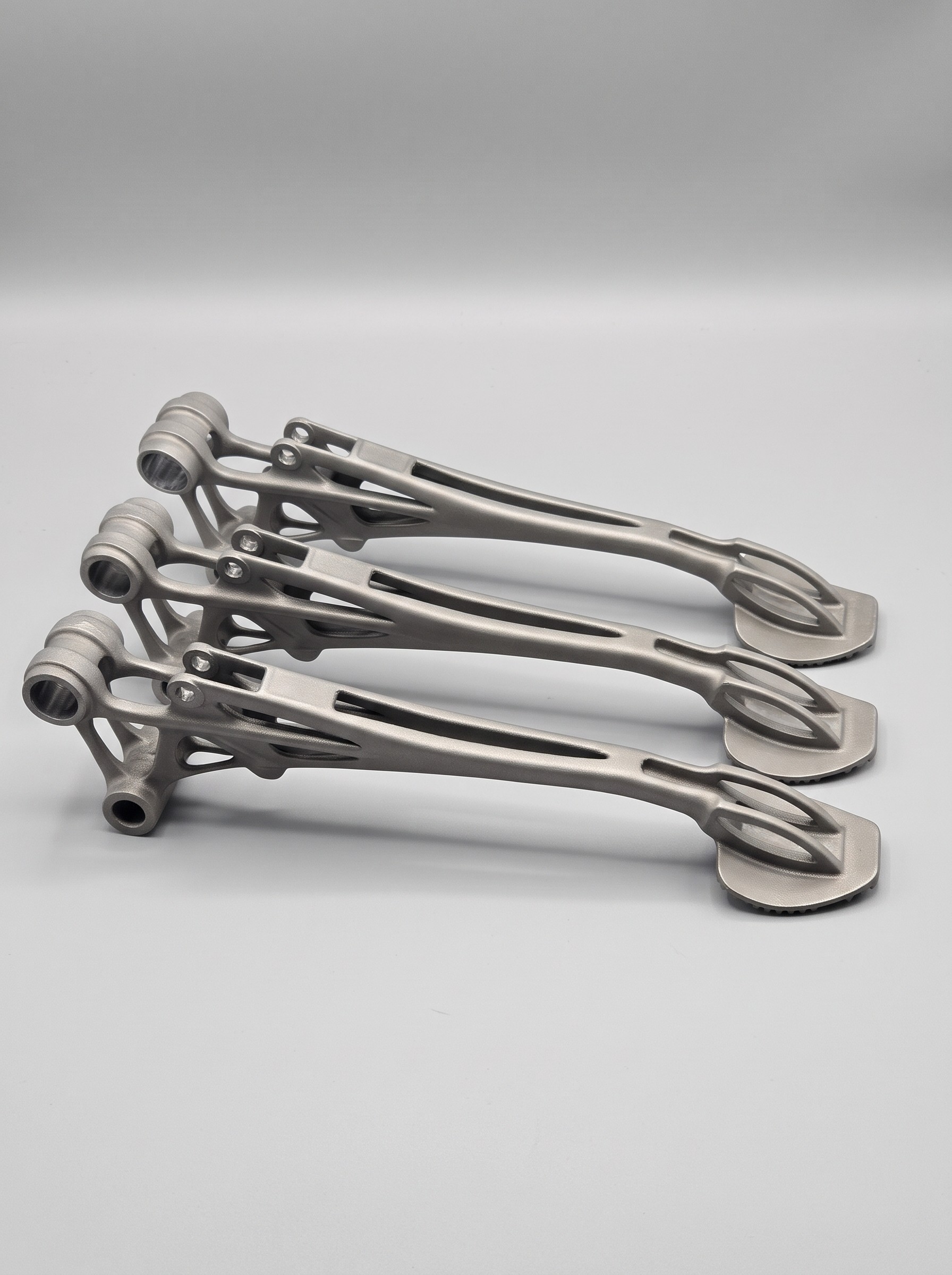
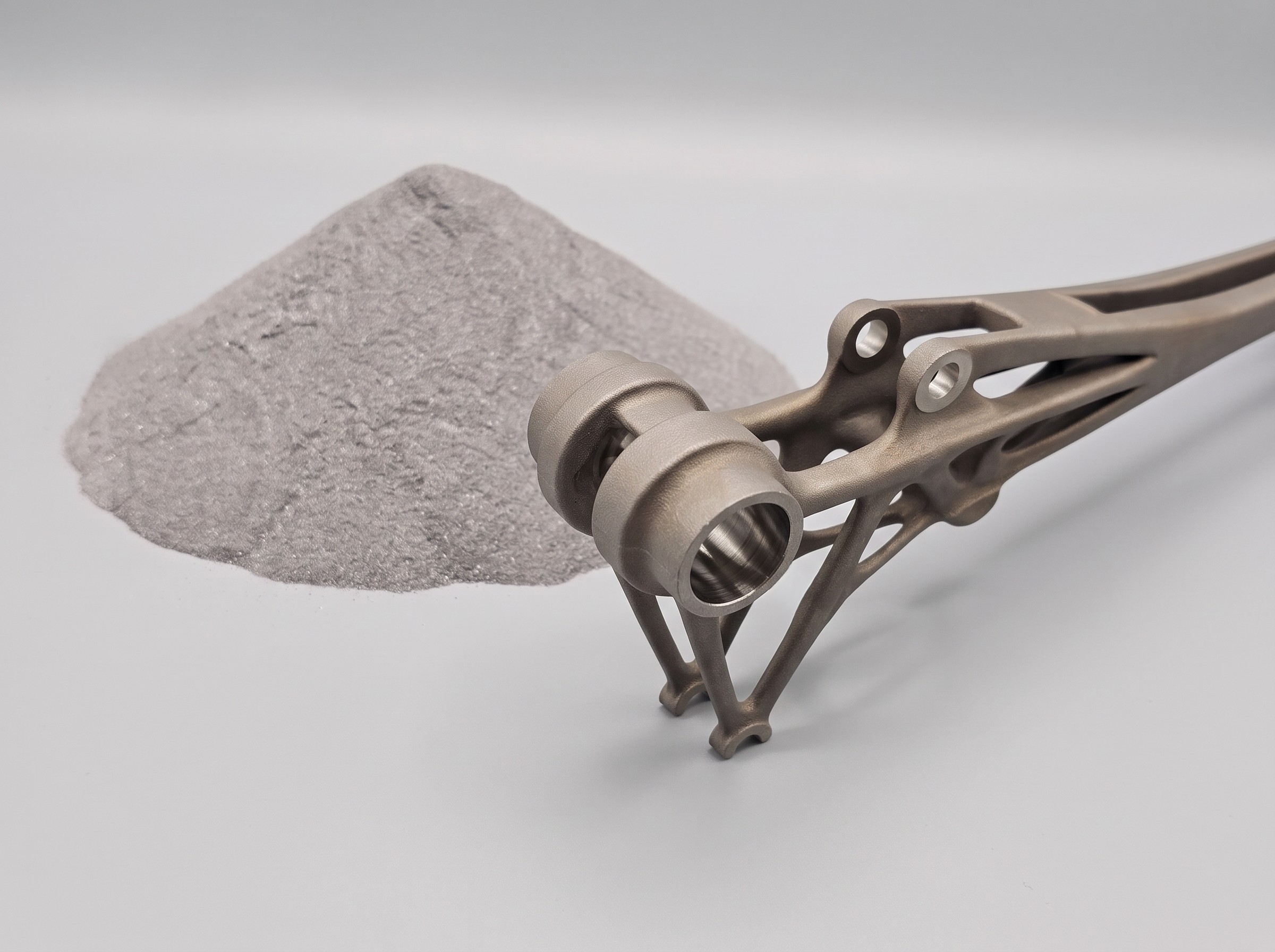
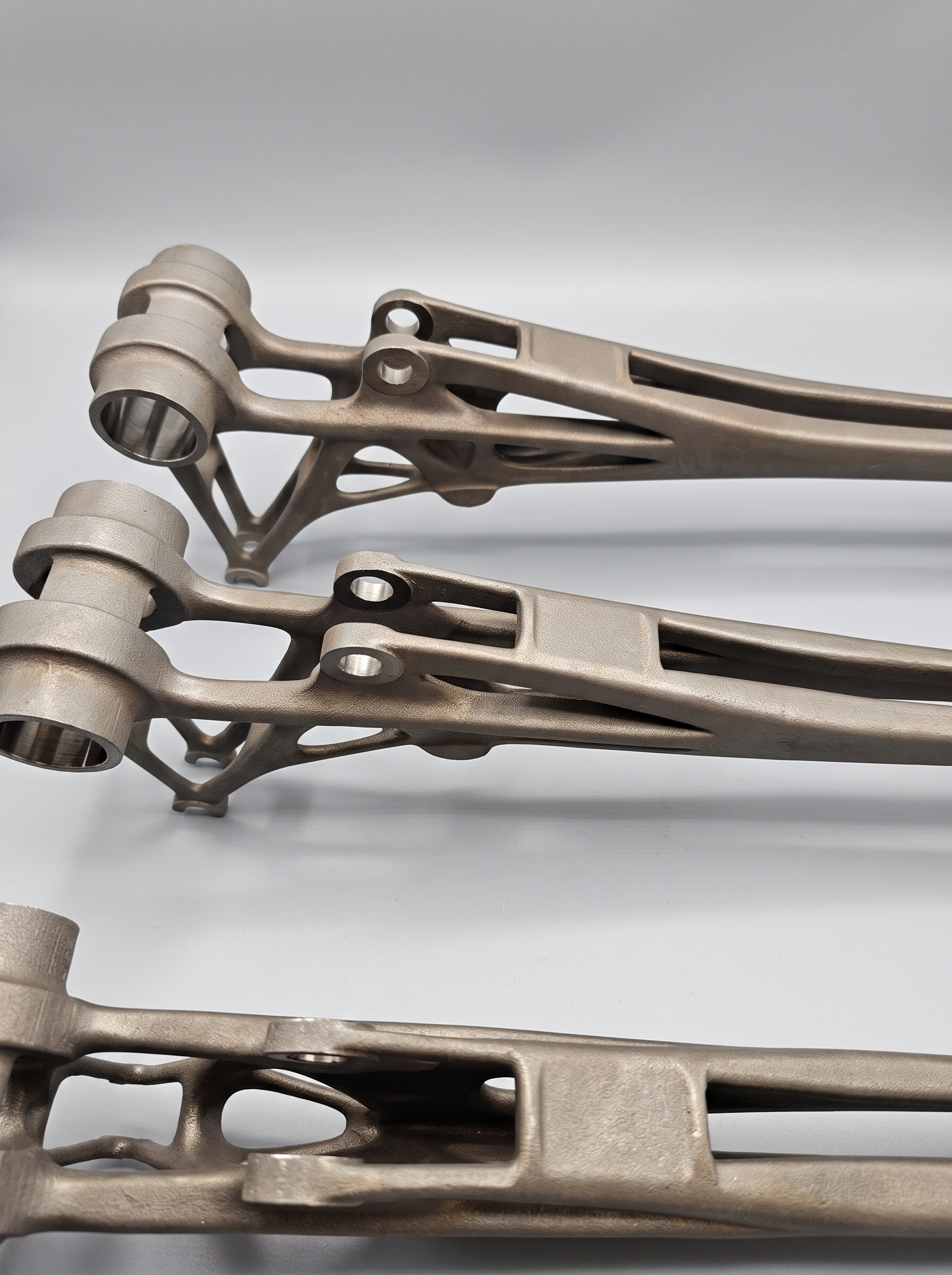
When a part needs to be as strong as high-alloy steel but can weigh almost 45 % less, we enter the premier class of 3D printing: Titanium (mostly used as Ti6Al4V / Grade 5). No other metal offers such an outstanding strength-to-weight ratio. Add to that: Titanium is practically immune to corrosion—even salt water, acids, or aggressive chemicals leave this high-performance material completely cold.
Titanium also handles temperatures of up to 400 °C in continuous operation without batting an eye.
Titanium is notorious in classic machining: It wears out milling tools at record speed, and up to 80 % of the expensive raw material ends up as chips in the trash. In 3D printing, on the other hand, we only use exactly the material that is actually in the part. This saves cash and enables highly complex, biocompatible, and ultra-light high-performance parts.
01 / ENGINEERINGFrom initial sketches and reverse engineering to manufacturing-optimized CAD files (DfAM), assembly consolidation, and seamless transition to injection molding.
02 / POLYMERIndustrial series components and prototypes using powder bed fusion (SLS & MJF), precision resin printing (SLA & DLP), and robust FDM printing (including large-format up to 800 mm).
03 / METALHigh-stress metal components via SLM using aluminum, stainless steel, or titanium—including heat treatment (stress-relief annealing) and precision machining.
04 / FINISH & SERVICEFrom raw part to ready-to-install series product: in-house painting, dyeing, vibratory finishing, and chemical smoothing, as well as thread inserts and assembly.
Benutzen Sie das Chat-Fenster in der unteren rechten Ecke, um Fragen zu stellen.
Füllen Sie das Formular aus oder senden Sie uns eine E-Mail